This week in class we talked about EdCamps. What they are and how they are used.
An EdCamp is a free, participant-led professional development event for educators. It is often referred to as an “unconference” as it does not have a set schedule or any keynote speakers, but rather the agenda is created by the participants at the beginning of the day, for example. Anyone and everyone can suggest a topic to discuss, and the sessions are usually built around shared interests, making the experience of an EdCamp really flexible, relevant, and shaped by what educators actually want to learn!
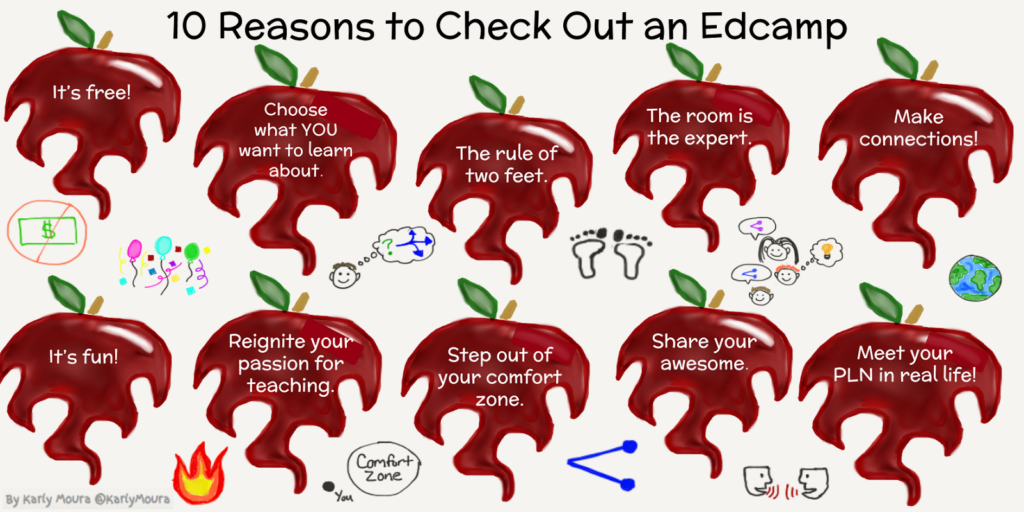
Unlike standard presentations or guest speakers, EdCamp sessions are mainly focussed on discussions where educators and other participants can. collaborate with one another, share their ideas, and even learn from someone else’s experiences. It is a low-risk, super supportive environment where you can move between sessions if you’re feeling adventurous, join in on the conversations that interest and just listen to the ones that don’t. At the end of the day you will walk away with strategies, resources and information that you can use directly in your classroom.
Before this class I had never heard of EdCamps before… but as someone who doesn’t love the spotlight or being forced to speak when I am either unprepared or not interested to, this kind of system sounds like it would work great for me. It’s funny I say that because I actually participated a lot in my groups EdCamp on Outdoor Learning and how we can integrate it into the classroom in a meaningful way rather than just a check mark on a list.
In our group we had a wide range of teachable subject areas so we were able to cover lots of cross-curricular topics and even share ideas that we hadn’t thought of before. We talked a lot about making it meaningful for students. Don’t just take them outside just to take them outside. Take them outside during math class and have them measure the perimeter of the school, or the circumference of a teachers car in the parking lot- things that are relevant and can actually be useful down the road for some people. Changing the way educators confront the “why” of what they are doing with their students is the minute they will have more buy in from them and maybe even more participation.
This kind of reminds me of coaching sports… for example, if I get my u14 boys soccer team to practice how to defend against a quick counter attack over and over again, but the kids are getting bored, I remind them (yes, maybe harsh, I know) about those few times we lost games because we weren’t ready to defend quick enough on the counter. And once they understand the why behind it, they don’t complain anymore, especially when we can move past the defending portion and talk about regaining possession to counter the opposition. Kids make me laugh. They really need the buy in to be on a silver platter for them or they just won’t want to do it.
I think someone like EdCamps could be used in my classroom in the future with my students. During Social Studies for example, the students could brainstorm some topics they are interested in and then chose the conversations and discussions they want to be a part of and have them share back what they did during the EdCamp- low-risk, high-reward because you get the students talking and collaborating about course content… hopefully.
Sorry, but comments are not enabled on this site.